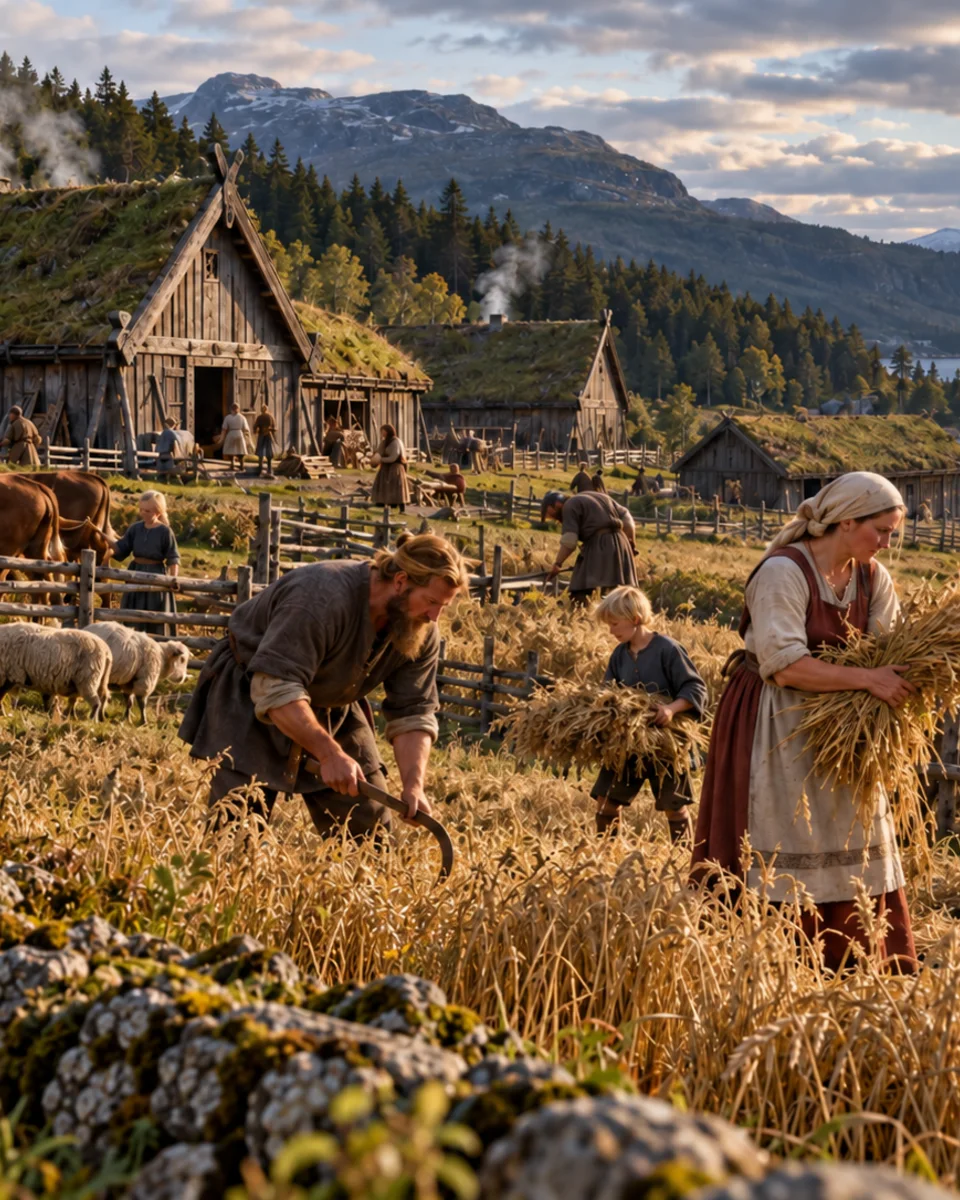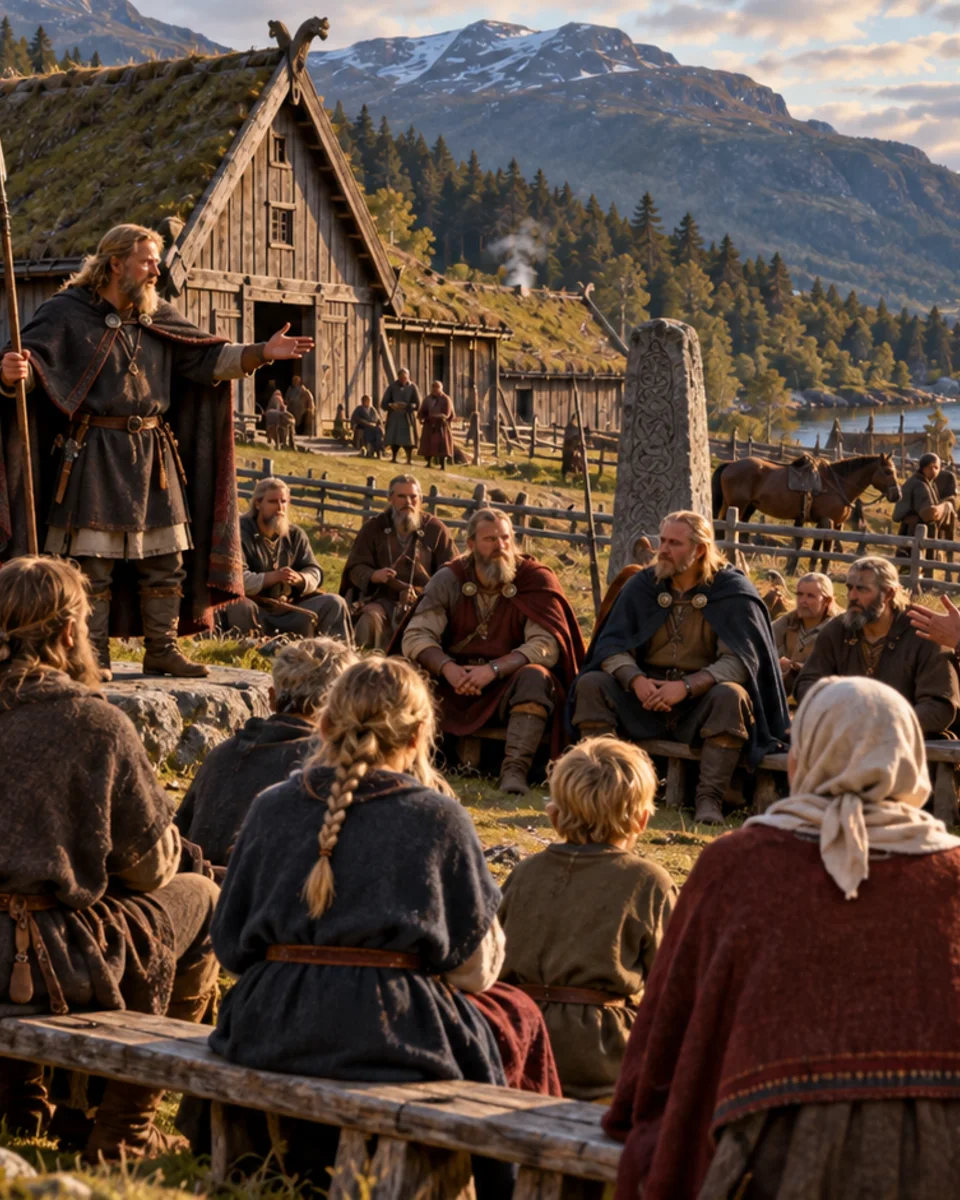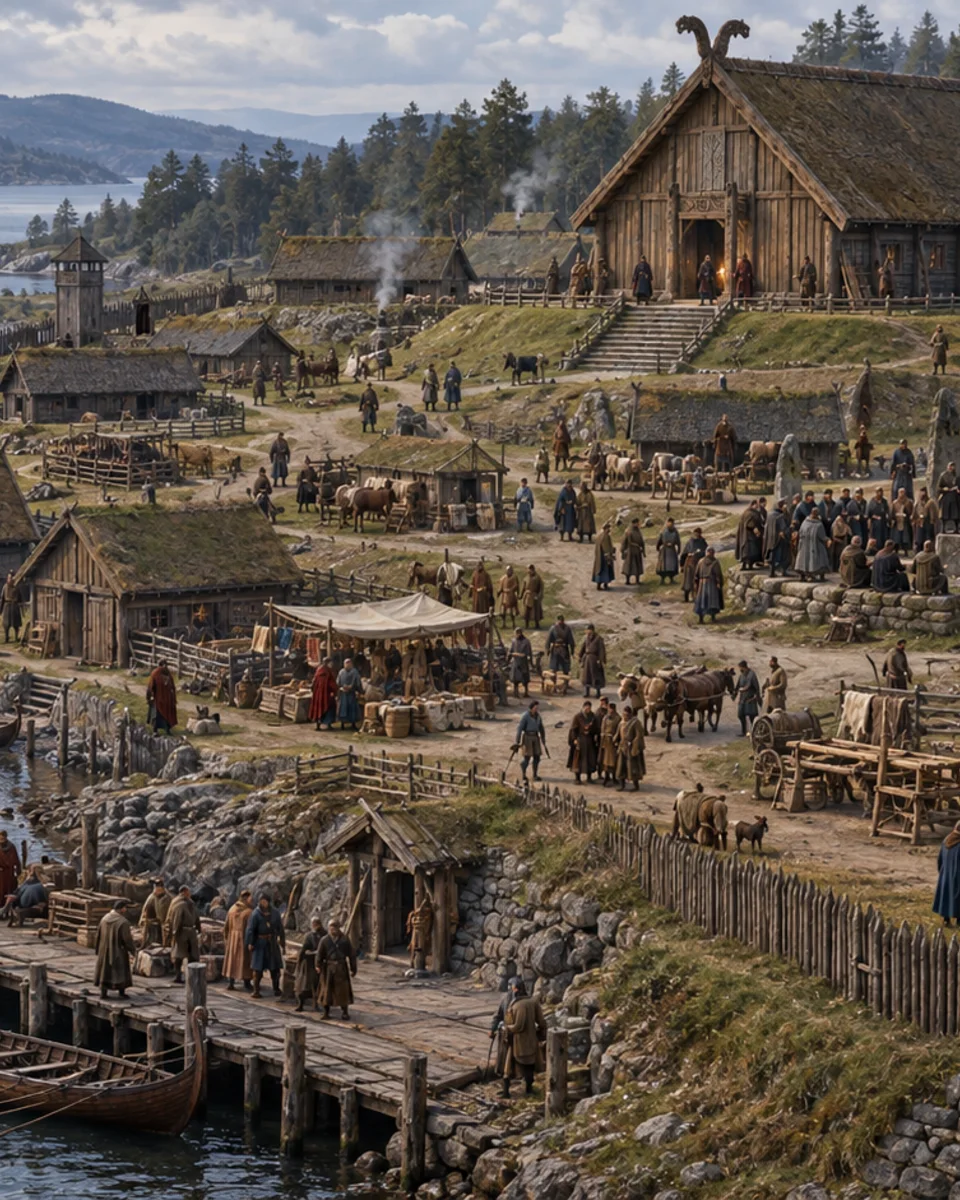
Imagine Scandinavia around the year 750. Along the coasts, farms, small settlements, and trading places are scattered among forests, fields, and fjords. There are not yet clearly defined kingdoms corresponding to modern-day Sweden, Norway, and Denmark. Instead, power is divided among chieftains, powerful landowners, and local kings, whose influence extends as far as their family ties, wealth, and warriors allow. In the morning, smoke rises from the roofs of the longhouses. Farmers lead their livestock out to pasture, smiths work at their forges, and down by the shore ships are loaded with furs, iron, amber, and other goods. Most people live from the land, but the sea is never far away. Ships connect communities and carry people to trading places, distant shores, and sometimes on raiding expeditions. To “become a Viking” was not a profession or an identity in the way we might think of it today. Rather, a person could go Viking, meaning to take part in a seaborne expedition. There could be many reasons for doing so. Young men might seek wealth, honour, and the opportunity to improve their position in society. Silver, weapons, livestock, and other valuable goods could transform a family's future. Trade and raiding were also often closely connected: the same ships and sea routes could be used for both. For chieftains and powerful landowners, Viking expeditions could also be a way of building power. Wealth brought home from voyages could be used to reward followers, form alliances, and strengthen their own position. Population growth, competition for land, and the opportunity to seek new territories may also have played a role in some parts of Scandinavia, although the reasons varied from place to place and over time. At the heart of a community there was often a powerful farmstead where a local chieftain or prominent landowner lived. Feasts were held there, agreements were made, and disputes were settled. At the Thing, free men gathered to discuss laws and conflicts. Religion was woven into everyday life. Gods such as Odin, Thor, and Freyja were honoured through offerings and rituals, while stories of gods, giants, and heroes were passed down from generation to generation. It was a world in which farming, trade, faith, honour, and warfare were closely intertwined. And it was from these coastal communities, farms, and centres of power that the expeditions emerged which would soon make the people of the North known far beyond Scandinavia as Vikings.