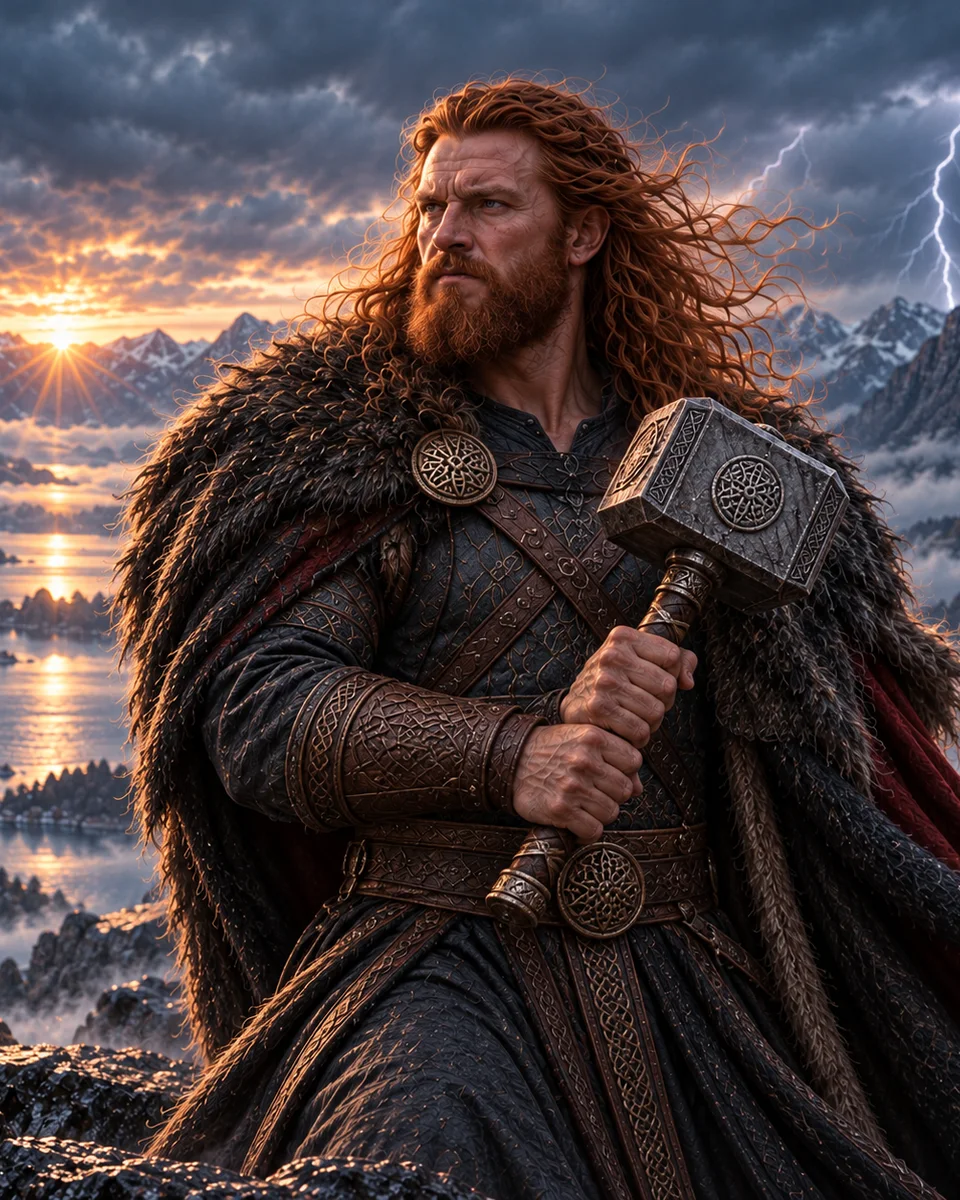
Thor was one of the most important gods in Norse mythology. He was the son of Odin and was especially associated with thunder, strength, battle, and protection. Unlike Odin, who is often portrayed as mysterious and endlessly searching for wisdom, Thor is more direct. When a problem arises, he often solves it with physical strength, courage, and his hammer.
Mjölnir – the hammer that always returned
Thor’s most famous possession is the hammer Mjölnir. It was forged by dwarfs and was one of the most powerful weapons of the gods. When Thor threw it at giants and other enemies, it struck its target and then returned to his hand. But Mjölnir was more than a weapon. The hammer was also associated with protection, blessing, and consecration. During the Viking Age, people wore small Thor’s hammer pendants as amulets, and archaeologists have found many such pieces of jewellery. They show how important Thor was to people in the North.
Defender of the gods
In the Old Norse stories, Thor repeatedly faces the giants, who often represent dangerous and chaotic forces. His journeys into the world of the giants are among the most dramatic tales in Norse mythology. One of the most famous stories tells of Thor’s encounter with Jörmungandr, the Midgard Serpent, the enormous snake that coils around the world of humans. During a fishing trip, Thor manages to pull the serpent up from the sea and nearly defeats it, but the struggle is interrupted. Their final meeting is destined to take place at Ragnarök. Another story tells how the giant Thrym steals Mjölnir and refuses to return it unless he is allowed to marry the goddess Freyja. To recover the hammer, Thor disguises himself as Freyja and travels to the land of the giants. When Mjölnir is finally placed in his lap as part of the wedding ceremony, Thor seizes it and defeats the giants. The story reveals both Thor’s strength and the humour that often appears in myths about him.
Thor and humankind
Thor seems to have been especially important to ordinary people. He was associated with things close to everyday life: weather, safety, the farm, and the protection of the community. Thunder could be frightening, but the rain that followed was also vital for farming. His name still survives today. Thursday originally means “Thor’s day”, preserving the name of the god in the modern English language.
Thor’s final battle
At Ragnarök, the great final battle of the gods and the world, Thor faces his greatest enemy: the Midgard Serpent. He succeeds in killing the serpent with Mjölnir, but his victory is short-lived. Thor manages to take only nine steps before falling dead from the serpent’s venom. It is an ending that fits Thor well. He continues to fight even when the danger is overwhelming. Thor is therefore more than simply the powerful thunder god with a hammer. He represents courage, protection, and the struggle against the forces that threaten the world. Perhaps that is why he has remained one of the best-known figures in Norse mythology, long after the old stories were first told around the fires of the North.